
Reverse Psychology
What I learned about totalitarianism while being raised by a grifter

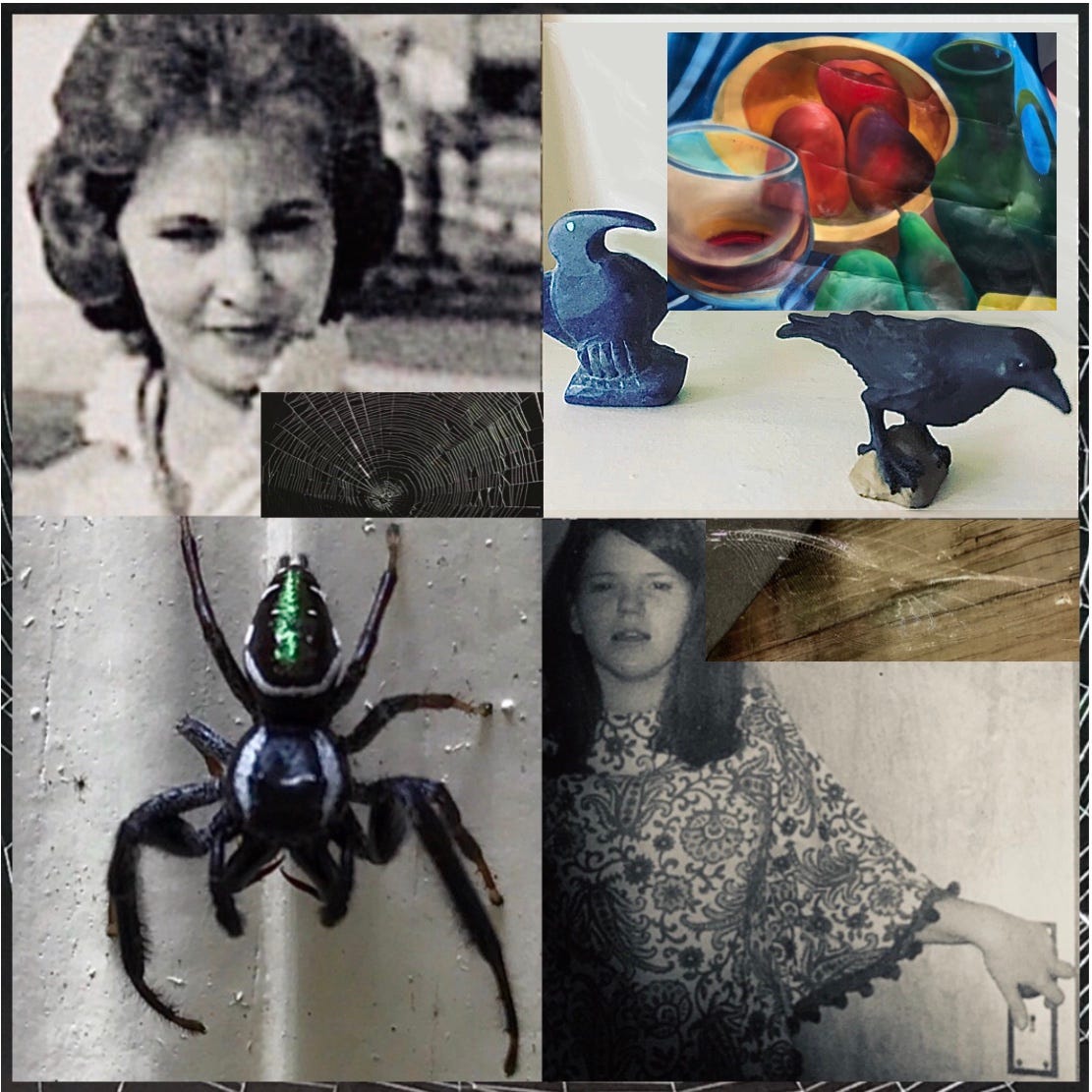
I know what it’s like to have someone in charge of my family’s well-being who is so negligent and unwell you find yourself homeless and hungry. Hopeless. Living in a car. Sleeping on the floorboards. Wondering how this happened, why you, why us. Day after day.
Kids don’t have a choice. Adults do. Now I’m an adult and I can see what happened to me as a kid more clearly. In my twenties, even thirties and forties I was still grieving, still healing.
It’s taken me a lifetime to gain perspective.
Perspective is such a gift if one can achieve it. It’s taken me a lifetime to understand why I had to lie to leave. Lie to get away from Mama. Knowing that no one was coming to save me. Knowing that most people couldn’t or wouldn’t see through her lies.
She was so convincing. So pretty. So cunning. So believable.
Friends would say your mom is so cool. I’d listen to them gush and pull my sweatshirt sleeves down over my wrists to cover the cuts, the scabbed over fingernail marks running up and down my arms.
At fifteen I sat up late at night thinking. Maybe if I knew enough, understood enough, I’d find a way to go back to the beginning, back to the place where everything went awry. Find the nutmeat of me, the part of me that mattered, start my life anew, and grow the correct way. Live the life I was meant to live. In English that year, we were studying “The Raven” by Poe, lingering over a word in the refrain: nevermore. We discussed the meaning of repetition. “It puts pressure on you,” the teacher said. “Do you get it?” he asked, over and over.
It had something to do with loss and death and the weight of all you couldn’t see, might never overcome, or ever fully understand.
I sat in front of a cold fireplace, waiting for Mama to come home from another night out, and plotted my escape. Maybe I could place an ad in the paper: Girl, aged fifteen, looking for a home base. Sick of old routes and old ways. Hoping for a home. Not expecting love.
Moody Sister was locked in our bedroom, passed out again, beyond reach. The little girls had fallen asleep eating take-out in front of the TV, and Mama’s last baby, Lawyer’s Son, was in his crib upstairs. He was only fourteen months old, his owl-like eyes still wide with wonder.
If I left, who would help him?
Who would take care of the babies?
“Hey, where the hell is everybody?” Mama yelled. She stumbled across the living room, eternally separate, still crazy-beautiful, like a dark wave rolling toward me, weaving on high heels, sloppy drunk, still drinking. It was very late.
She stood in front of me, a cheap bar glass in her shaking right hand, my baby-doll blouse crisscrossed under and uplifting her still va-va-vroom breasts.
“I’m stuck,” Mama said, taking another sip.
“What do you mean?” I asked. But I knew what she meant. I knew Mama better than anyone.
She fit all of what I would one day read and recognize in the German philosopher and social theorist Theodor W. Adorno’s description of the authoritarian personality type.
She demanded total loyalty and allegiance to her idea of right and wrong.
She was aggressive towards the children who defied her, the ones she decided were “different”.
She projected her own feelings of inadequacy, fear and rage onto her children; scapegoated the children she could not easily control.
She had a negative view of humanity in general, believing all people would lie, cheat and steal, if given the opportunity.
She resisted creative ideas; a black and white worldview served her best.
She had a preoccupation with sex and violence.
She was the woman who was never another woman’s friend. The kind of woman men left their wives for, parted with their hard-earned cash to get close to, took back after being burned, and finally ran like hell from.
She wasn’t “stuck” because she needed money, though she did. She was stuck because she needed new people. Needed them like she needed a drink: for courage, and for soul solace, for security, for way more than financial support. She needed to be desired. It didn’t matter if she wanted them or if she even cared. She probably already had the next clueless mister lined up, ready to add his last name to hers.
“What’s the matter?” I asked. “Doesn’t he like kids?”
“He already has kids. Boys your age,” she said. “Spoiled brats. He gives them everything they want.” She leaned forward and her thickened midriff pushed over the top of tight slacks.
“Guess he won’t need any more then, huh?” I was so done with daddies, unable and unwilling to meet another new one.
I wanted to pull her red hair out of her blurry eyes and say: Enough! Wake up. Pay attention to me, to us. But I didn’t and I never would. I watched her toy with a frayed thread on her blouse, my blouse, one I would never wear again. I watched her calculate her need of me and then I moved in with the only kind of ploy she ever went for: reverse psychology. I used it that night. Pried her fingers out of my servant soul.
Shook off my overlord Mama, I hoped forever.
Did I love her? How could I not? She was pure potential. All she would ever be to me was forever unfulfilled. Emptiness. Explicit, brazen, and monstrous: a war mural, an epic poem, a forced march across an abandoned world. Mama was large and powerful, and doomed. How could I not love her? And how could I not leave her. There was no love there. Only harm.
Like all grifters she was incapable of sympathy or empathy for others.
Sympathy; a feeling of compassion, pity and sorrow for someone else’s misfortune. Empathy: the ability to understand and share those feelings.
“Don’t be such a smart ass,” she said. Gave me a warning look, then lay back on the floor and faced the ceiling. “He loves me. He’ll do anything I say. And his kids are good kids. They will love me too.”
They will not love you for long. They will discover in you another dimension of feeling, darker than space. They will call you vixen. They will see your viciousness, but not your cowering need. You will have another boy or girl with this new him whom I will never know.
“So, when do we meet him?” I asked, false expectation in my voice.
“He said he wants to meet you kids,” she replied. “My kids,” she corrected. Eyes dilated, she panned the room, newly nervous, a submarine periscope on the lookout. Unscrewed the cap from the bottle in her bag and refilled her glass. “Since when do you care?”
“Just curious,” I said, trying to sound offhand.
Careful. Let her do the work. Make her show you the way out.
“I’ll take the little ones over with me tomorrow,” she said. “So, they can meet him.”
There it was. I was the problem: a telling notch on the timeline. Mama didn’t need a shapely daughter carving up her terrain. She looked young surrounded by the right props: little kids, not a teenage girl in a halter top and jean shorts, with gold-flecked hair to her slender waist.
It was time. I was as good as gone.
“Just don’t make me live with Real Dad,” I said. “That’s all I ask.” Tossed it toward her, half begging, but sure of my aim.
What you didn’t want, she’d give you freely.
“What are you talking about?” she asked.
“Whatever you decide about the new guy,” I said, leaning toward her in a sisterly way, conspiratorial like Aunt Jo, opportunistic and light. “Whatever you do, don’t make me live with Real Dad. Don’t make me do that. Please.” I whined and lied all at once, handing it right to her.
If she’d taught me anything, she’d taught me this: liars, especially vain ones, are very easy marks.
Her smile slid over the top of her glass. Her eyes green glints in brown liquor. “He wants you, doesn’t he?”
“God, I hope not,” I answered, holding her gaze. Didn’t look down. Didn’t look away. If I were lucky, if this worked, I would never see her again.
On the phone, Real Dad had offered me my own bedroom, consistent dinnertime, and the chance at two solid years in the same high school if I came to live with him and his new wife and their two little girls. No one to cry over; nobody I had to keep safe.
Maybe he even meant it when he said they wanted me.
“Well, he is your father,” Mama said. She set her glass down on the cold hearth and laughed. “God, I bet that skinny waitress bitch he married would just love to get to know you better.”
Mama laughed and the door swung wide open.
One day I was reading a poem for school and the next day I was standing on Real Dad’s porch with all I owned in a paper sack.
It’s taken me a lifetime to write about jumping off my falling family tree.
To describe the journey from Mama’s car to Real Dad’s home, from my stepmom kicking me out, to asking the state of Missouri to put me into foster care, from aging out to coming to understand what happened to me and all the kids in her car. It’s taken me a lifetime to tell my story. To come to know in my bones that art is more than self-expression, or entertainment, a weekend workshop, or a trip to France. Art is more than staving off boredom or even inevitable death. Art is the ultimate resistance to coercive control. Defined as an act or a pattern of acts of assault, threats, humiliation and intimidation or other abuse that is used to harm, punish, or frighten their victim. Coercive and controlling behavior is at the heart of domestic abuse, and every dictatorial regime.
I should know. I was raised by a totalitarian.
Wow, Chris. Just wow. Spellbinding. So gorgeously written. I marvel again and again at your wisdom and courage, both then and now.
“Art is the ultimate resistance to coercive control.” So true. And you have laid out the situation so clearly. This is the essence (and reality) of the situation.