
Other People
All of us strangers, even to ourselves, until we are not.

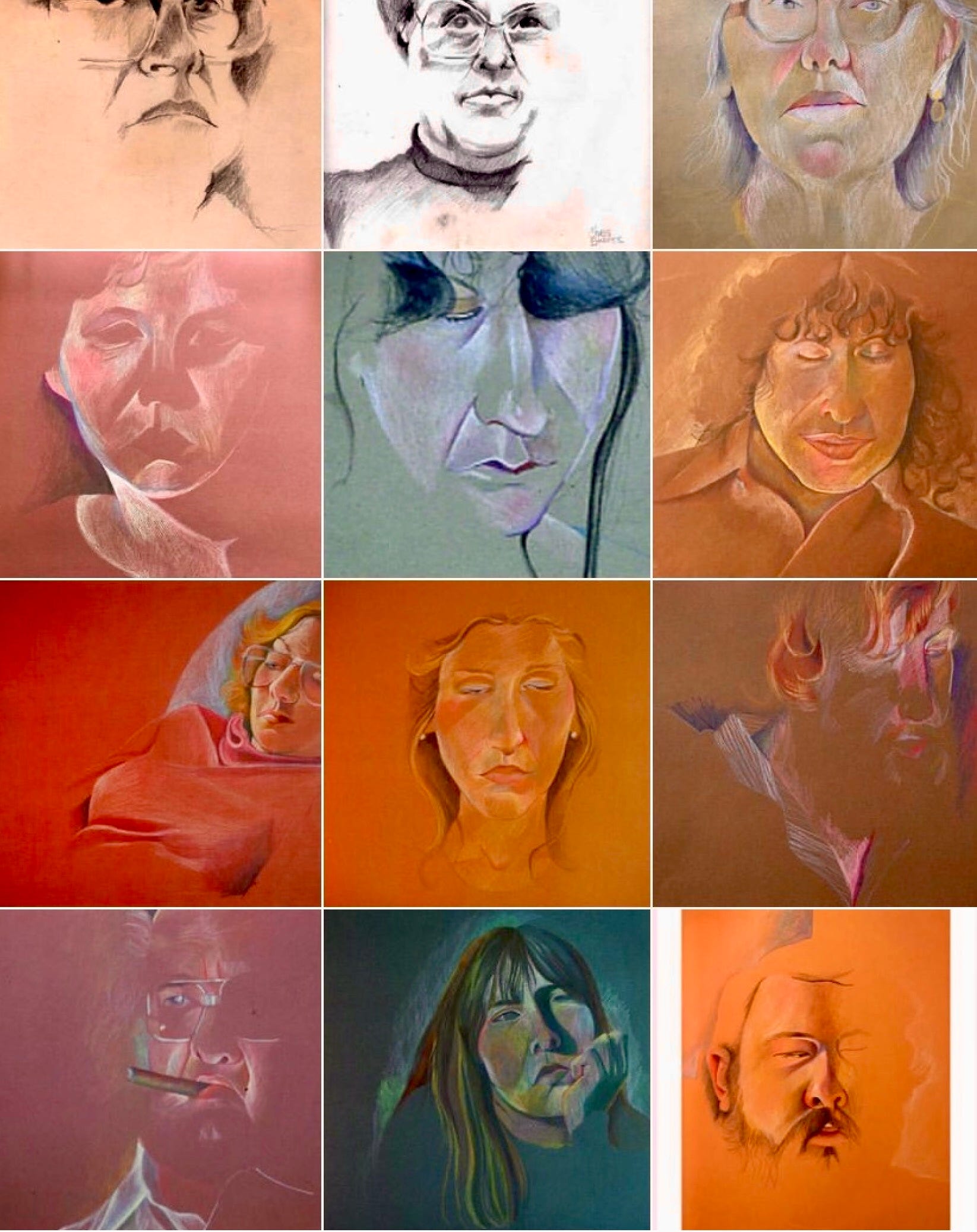
The past few months I’ve been volunteering at Revision Project, a nonprofit organization here in San Diego a nonprofit art collective, a creative and inclusive space for neurodivergent artists. A few weeks into volunteering J. the creative mentor I work with asked me to assist her in an after-hours weaving workshop for an LGBTQ+ Leadership Group come from another local nonprofit. I said yes, of course, ever ready to help. I felt at home at Revision, a place made for inclusive creating.
A few days before the workshop while helping J. get ready for it, threading small looms, organizing materials, piles of yarn, ribbon, bows, torn strips of cloth, while I methodically sorted materials J. told me I wouldn’t believe it, but guess what? The young people who would be attending the workshop were all former foster youth. Now in their 20’s and aging out of the system with the help of an organization called Promises2Kids. A program providing foster youth with the resources and opportunities necessary to prevent homelessness.
33% of those transitioning out of foster care will experience homelessness
I’d shared with J. that I was a former foster youth. In just the short time working together we’d both shared a bit of who we were and where we’d come from with one another. I’d told her about my work as an artist, a writer, a researcher and librarian. Hoping all the ways in which I’d tried to make a living over the years might be of some use to Revision. More importantly I’d told her how I’d always felt I didn’t belong anywhere.
Approximately 80% of foster children experience mental health challenges including depression, post-traumatic stress disorder, suicidal thoughts and others related to their traumatic past.
The evening of the workshop, after the group of young people had filed in and taken their seats, J. introduced herself and the amazing creative space we all occupied. Then she asked me to introduce myself. I was in an art space helping people make art, so I began with those qualifications.
“I have an undergraduate degree in art,” I said. “And a master’s degree in art. And a master’s in library science.” Then I paused before saying…. “and I achieved those degrees after aging out of foster care in Missouri.”
The room went super silent. We all knew the stats.
Only 55% of former foster youth will attend college and of that, only 8% will graduate.
I held my breath. Then we all became busy with making. I walked around helping where I was asked, answering technical questions, and reassuring them that there was no way to fail. No way to make a mistake. After a while J. and I took a breather. We sat down together behind a young woman who was weaving with such intensity.
“I’m in art school,” she told us. “June I finish.”
“Wait,” I said. “Are you getting your degree in art in June? Are you graduating?”
“Yes,” she answered. Beaming. “I am,” she said, and turned to fully face me.
“Congratulations!” I told her. “That’s a really big deal. Congratulations!” I said again. Knowing how difficult that was to achieve and how important it was to be recognized for achieving.
To hear praise and not push it away. To allow yourself to be seen.
We talked about her art making. How she was creating work expressly about her experience in foster care. I was impressed and I told her how impressed I was.
I wasn’t able to make work about where I had come from for a very long time. For too long I wasn’t able to feel my own suffering and connect it to the tremendous joy I experienced while creating. For far too long I was not able to weave all the threads of my own life together. I was too busy trying to please other people. Stopping when their criticism cut me to the bone. When I was called a hick. Told I was a pretendian, a fraud, when I wrote about Indigenous roots on my maternal side. Told I didn’t know what I was doing when I taught drawing. I was fired from the only teaching job I’d ever had for incorrectly teaching students how to translate the depth of the world onto a two-dimensional plane. Twenty years later I’d learn I had strabismus and could not see peripherally or in three dimensions. Only after two operations in my fifties was I able to see what I hadn’t seen in decades. The world surrounding us with all its depth.
After the operations I began to draw again as if with new eyes.
A perennially late bloomer playing catch-up.
I’d gone back to school every decade of my life. It took all of my 20’s to get a BA in Art. Cost more than I could afford in my 30’s to get an MFA. In my forties I’d earned a degree in Library and Information Science, while working full time. In my 50’s I began to seriously write and to study with writers I admired, John Rechy, Lidia Yuknavitch. In my 60’s I jumped through all the writer workshop hoops I could, never thinking I was good enough. In my seventies I started a newsletter on Substack, this newsletter, meant at last to share my own story of aging out of foster care. A septuagenarian who has spent her lifetime chasing dreams. A former foster girl, identity in fragments, always wondering who she was, and where she belonged. Saying to herself: Don’t be afraid. Showing up for others will not destroy you; this witnessing will keep you alive.
And it has, it does, it will.
Because all of us are strangers, even to ourselves, until we are not.
Reference
https://www.revisionsandiego.com/
https://promises2kids.org/
Statistics are from Promises2kids
You have so much to give. It sounds like you have found a good place to give your best and connect with others. I’m so happy for you (and for the people you mentor).
So happy you have this place and these folks. You have so much to bring. Big hugs to you, my friend.